Are we all in danger of losing our jobs to AI? Does everyone actually use AI at work?
The Piktochart team surveyed 200+ users globally to see if AI hype is overblown.
We looked at how using AI tools affected users’ work routines, their teams, their companies, and their careers. We summarized our findings below.
For a related read, see our guide on carbon footprint of chatgpt.
Here’s a summary of our findings:
You might also find our article on studio ghibli chatgpt useful.
- Virtually all respondents personally use AI tools for their work.
- Over half were extremely optimistic about AI boosting company-wide productivity in the next 1-3 years.
- More than half of respondents felt it was essential for their career development to use AI well.
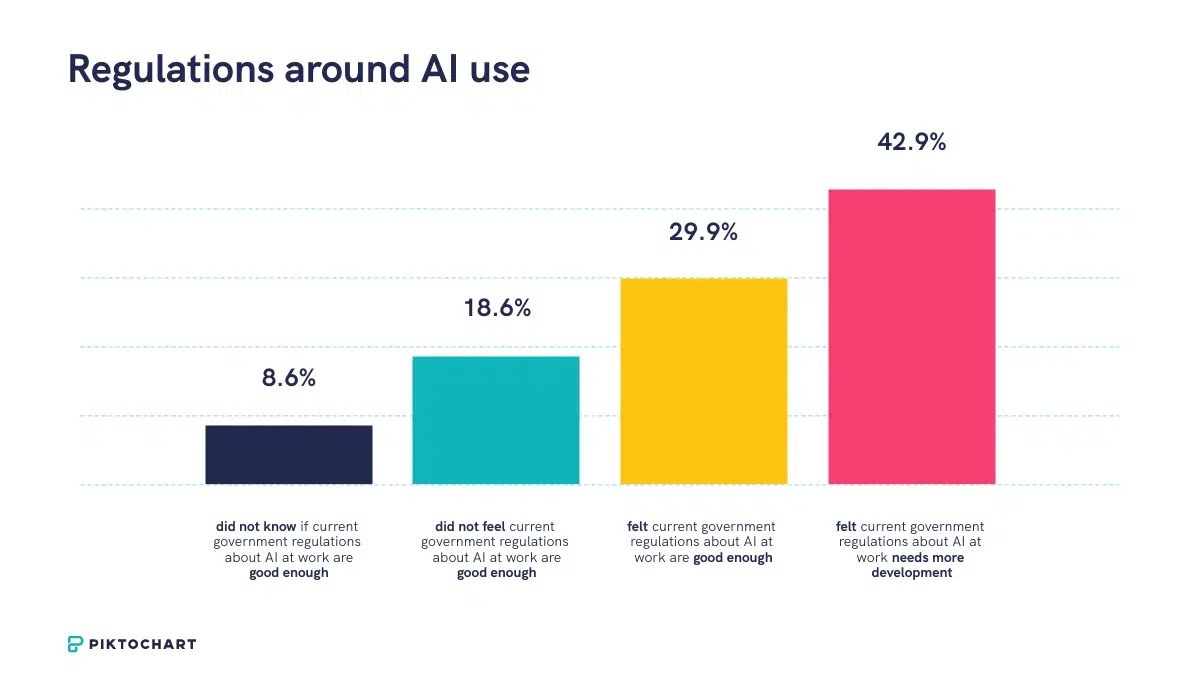
- Nearly half of all participants felt current government regulations are insufficient and more regulation and transparency is needed in the AI space.
Nearly all respondents personally use AI tools for work
Virtually all respondents personally use AI tools regularly for work and use AI to spend more time on creative or important tasks. Although most respondents had to learn new skills to effectively use AI, over half felt that AI significantly increased their own productivity at work.
Looking for more? Check out what jobs will ai replace.
AI tools used regularly at work
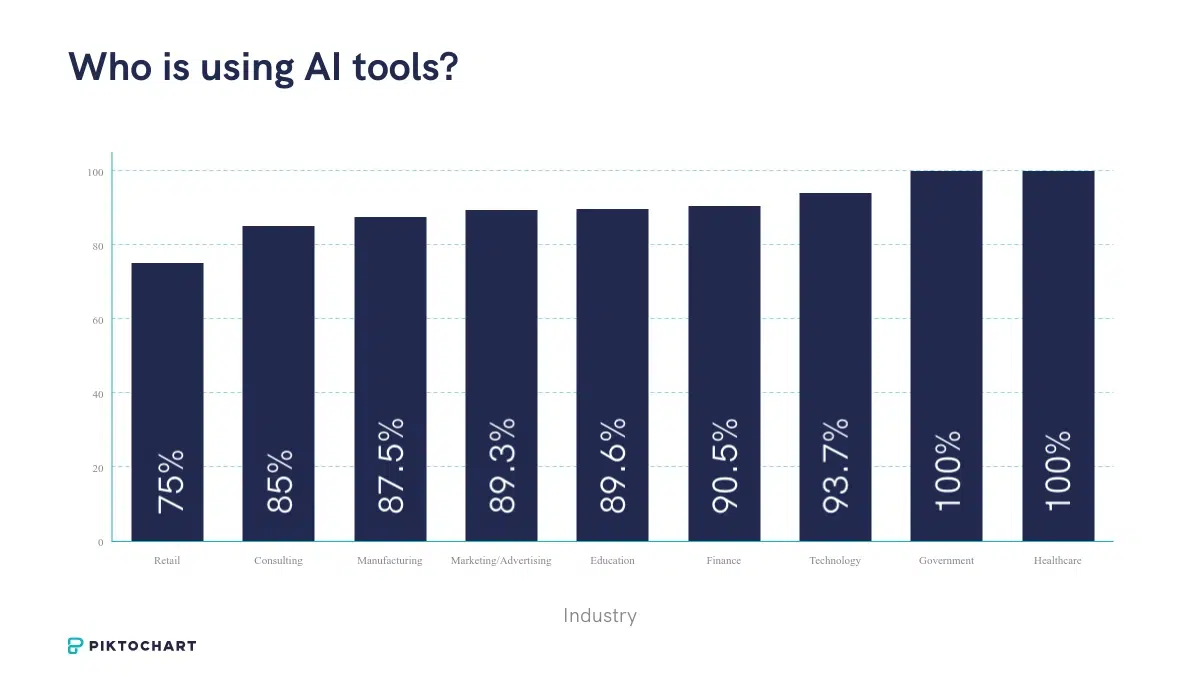
- About 94 percent of survey respondents working in tech report using AI.
- Over 90 percent of survey participants use AI regularly.
- Even marketers and advertisers, along with educators and finance sector employees, were equally likely to use AI tools at work, clocking in at roughly 89 to 90 percent.
- Meanwhile, in the fields of retail, consulting, and manufacturing, 75 percent report using AI tools for their work.
AI and work productivity increases
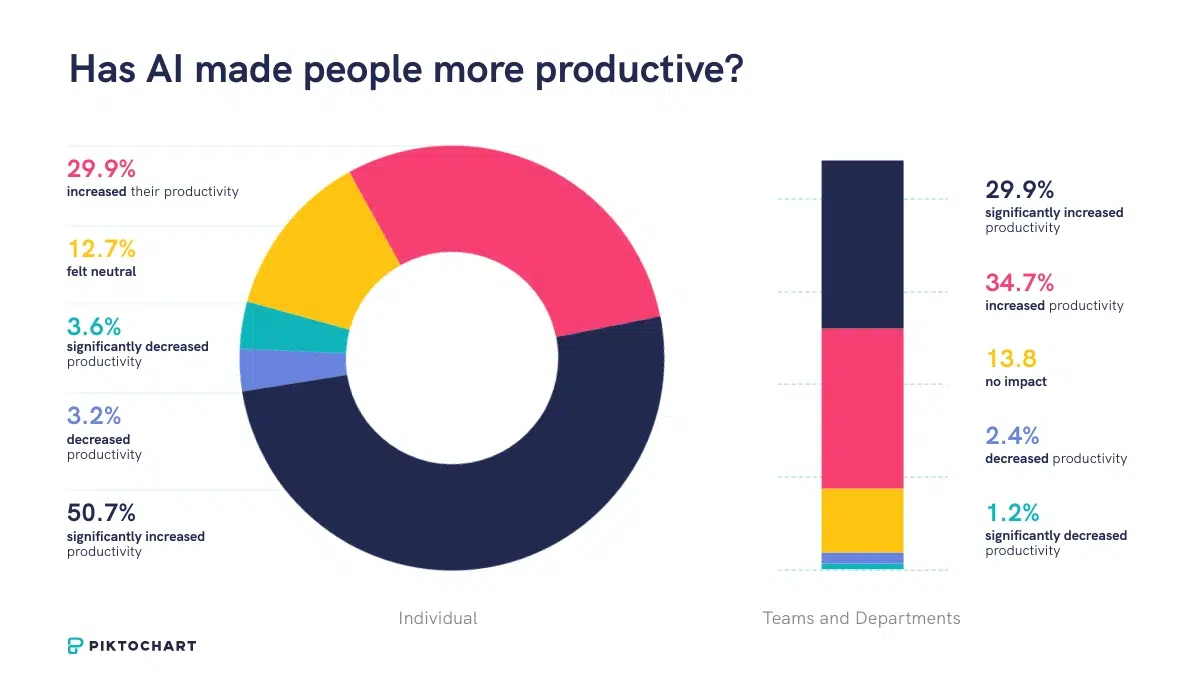
- Over 50 percent of all respondents felt that AI significantly increased their own productivity at work. Only 12.7 percent felt that AI neither increased nor decreased their productivity.
- A small minority of respondents felt AI actually decreased their productivity at work. Three percent of respondents felt that AI decreased their productivity while another 3.6 percent of respondents felt that AI significantly decreased their own productivity.
Learning new skills to efficiently use AI
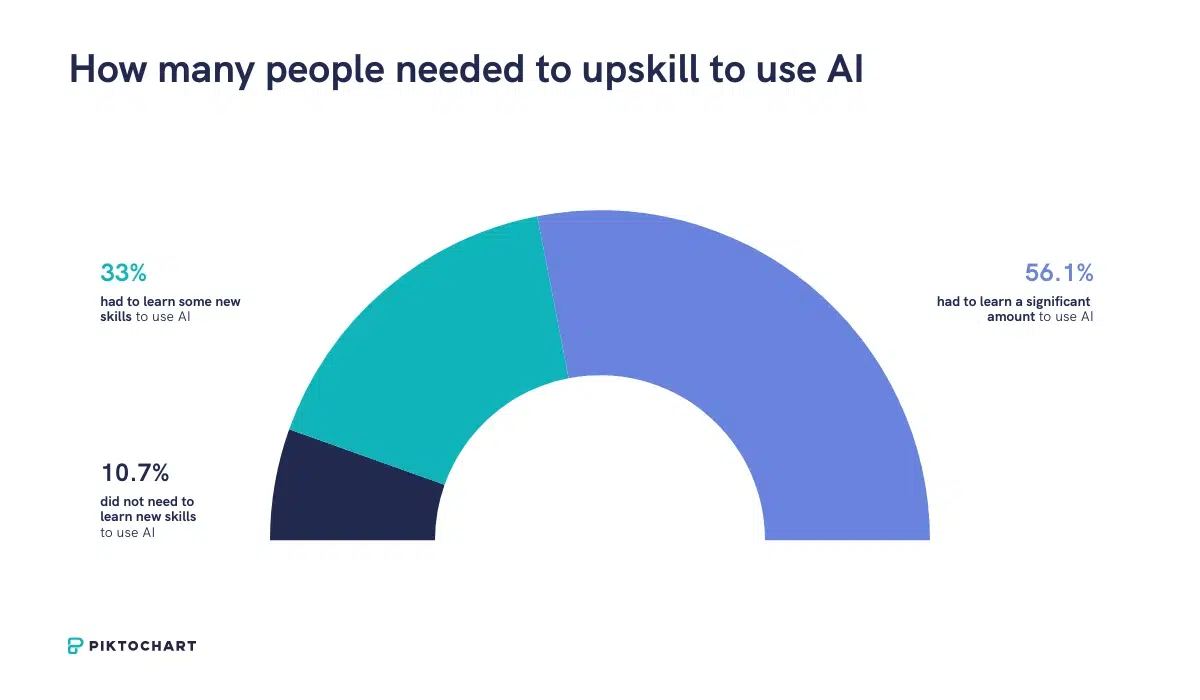
- Nearly 90 percent of survey participants had to learn at least some new skills to use AI at work. One third of respondents had to learn some new skills while 56.1 percent had to learn a significant amount of new skills in order to use AI at work.
- In contrast, only 11 percent of respondents did not need to learn new skills to use AI tools.
- Employees in technology and education fell into two groups: those who felt they had to learn the most new skills to use AI at work and those who felt they did not need to learn any new skills.
- Marketers/advertisers, healthcare workers, and manufacturing workers felt they needed to learn only some new skills while those in retail, consulting, and finance felt they did not need to learn new skills for AI tool use at work.
AI: an opportunity to rebalance priorities
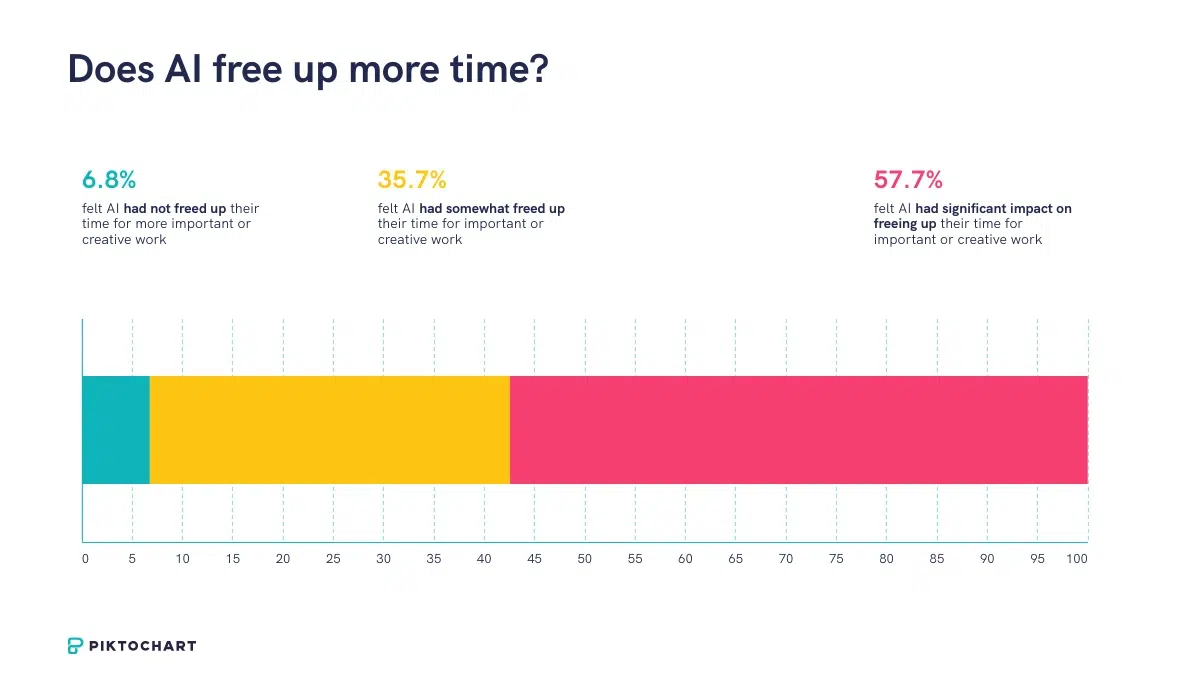
- A whopping 93.4 percent of survey participants felt that AI made some amount of difference to a significant impact on freeing up their time for more important or creative work.
- Meanwhile, less than ten percent of users felt that AI had not in fact freed up their time.
- Of those who answered that AI did not free up their time, most identified their industry as customer service, followed by marketing, sales, training, and research.
Top impact of AI – Getting things done faster
- The three areas seeing the biggest impact from AI overall according to participants were AI helping them to get tasks done faster, improve data analysis capabilities, and come up with new ideas.
- When asked to rank where they’ve seen the biggest impact from AI, getting tasks done faster was the winner by a long shot, followed by accuracy of work, and improved data analysis capabilities.
- The second place winner for biggest impact for AI was improved data analysis capabilities, with automating boring/routine tasks a close second, and accuracy of work third.
- Finally, the third ranked biggest impact from AI was generating new ideas/being creative, followed by enhanced decision-making support, and improved data analysis capabilities.
Could AI make us worse at our jobs?
- The top three downsides to using AI overall according to survey respondents were the difficulty of checking if the AI output was correct, losing skills by relying too much on AI, and less human interaction.
- We asked our users to rank the biggest downside to using AI, and their top first answer was job role insecurity. Next, they worried about technical issues with AI hindering work, and losing skills by relying too much on AI.
- The second biggest concern for respondents was less human interaction, though they were also concerned about losing skills by relying too much on AI and the difficulty of checking if the AI output was correct.
- Lastly, the difficulty of checking if the AI output was correct was on users’ minds, followed by the fear of losing skills by relying too much on AI and technical issues hindering work.
AI essential to how a quarter of companies operate
Survey participants found AI relatively easy to integrate into their workplace and see AI use spreading company-wide, along with a corresponding team or department productivity increase. Generative AI was by far the most used form of AI for companies.
Company-wide AI use spreading
- 78.4 percent of participants said AI was being used across the company in some way.
- 28.7 percent said that AI was being used in several departments, 24 percent said AI was being widely used across the company, and 25.7 percent said that AI was essential to how their company operated.
- Only three percent of those surveyed believed that AI was not used in their company whereas 18.6 percent said that AI was being tested in a few teams.

AI has made teams and departments more productive
- 70.9 percent of users felt that AI had increased their team or department’s productivity on some level. 34.7 percent felt that AI had increased their team’s productivity and 36.2 percent felt that AI had significantly increased their team or department’s productivity.
- Meanwhile, 13.8 percent of respondents felt that AI had no impact on their department’s productivity, either positive or negative.
- Not all survey respondents felt AI was a net positive for their team or department. In fact, 2.4 percent felt that AI had decreased their team’s productivity and 1.2 percent felt that AI had in fact significantly decreased their department’s productivity.
AI – an efficient data analyst and content creator
- According to survey participants, three main ways AI is used at their job or company is to improve efficiency and productivity, enhance data analysis and insights, and create content.
- When asked to rank the three main ways AI is used, the top ranked answer was improving efficiency and productivity, followed by automating routine tasks, and enhancing data analysis and insights.
- The top ranked second answer for AI usage was enhancing data analysis and insights, improving efficiency and productivity, and creating content.
- Finally, the top ranked third answer for how AI is used at work was developing new projects, followed by a three way tie among enhancing data analysis and insights, creating personalized customer experiences, and creating content.
Generative AI rules the pack
In terms of what kinds of AI participants’ companies were using, generative AI was by far the winner, followed by design-related AI tools, and AI for data analysis and machine learning.
AI relatively easy to integrate into the workplace
- For most participants, it was relatively easy to integrate AI into their workplace.
- Only 7.8 percent of respondents found it difficult to integrate AI into their workplace.
- In contrast, more than a quarter of respondents felt it was somewhat easy to integrate AI into their work and 23.4 percent found it easy for AI to be integrated into their workflow.
- Finally, 42.5 percent of respondents found it very easy to integrate AI into their workplace. The respondents who found it very easy to integrate AI into their work were found in the technology, education, and healthcare industries.
Companies doing enough to prepare staff for a future with more AI
Almost three quarters of respondents believe their company had plans to use more AI in the future and that their company was doing enough to prepare their employees to use AI. Employees agreed: those who received some AI training found it helpful.
AI is here to stay at almost 80 percent of companies
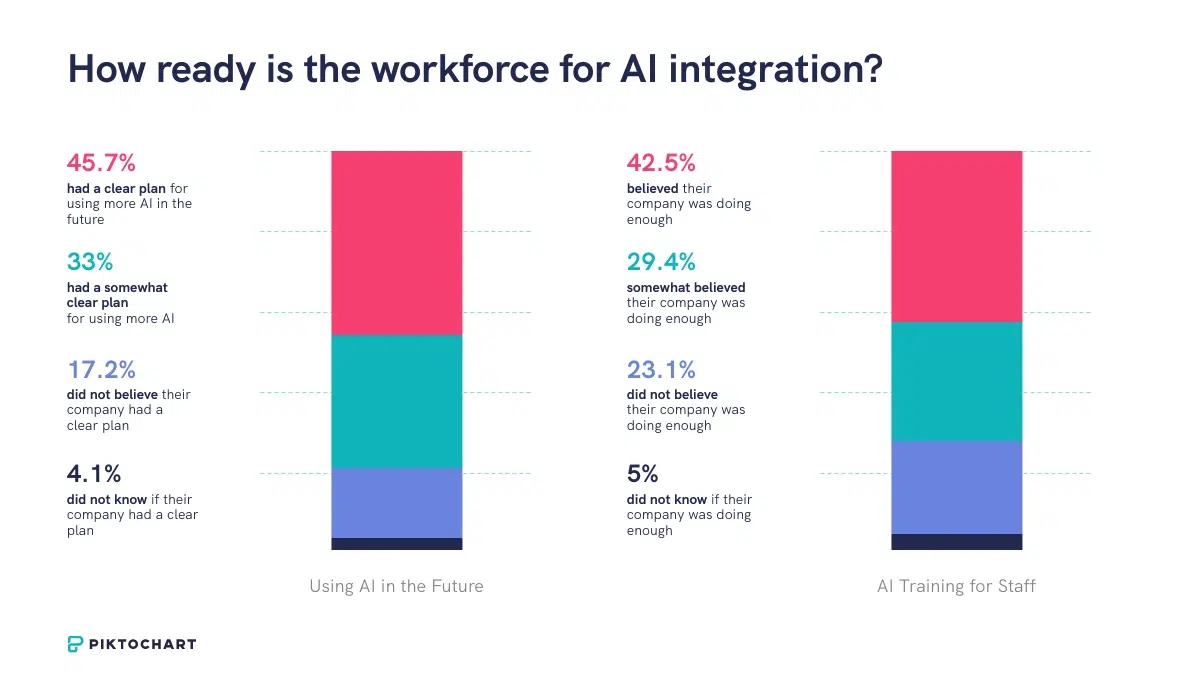
- 45.7 percent of respondents felt their company had a clear plan for using more AI in the future while one third of respondents said that their company had a somewhat clear plan for using more AI.
- This means that 78.7 percent of respondents’ companies intend to use more AI in the future.
- In contrast, 17.2 percent of respondents believed their companies did not have a clear plan for using AI and 4.1 percent of respondents did not know if their company had a clear plan for using more AI.
Are companies doing enough to prepare their companies for AI?
- Almost 75 percent of respondents believed their company was at least somewhat doing enough to prepare staff for AI.
- 42.5 percent of respondents believed their company was doing enough to prepare staff for a future with AI while 29.5 percent of respondents believed their company was doing somewhat enough to prepare staff.
- On the flip side, 23.1 percent of respondents did not believe their company was doing enough and 5 percent did not know if their company was doing enough to prepare staff.
- Of the 23.1 percent of respondents who felt their company could be doing more, the majority of those who felt that way were in the education sector.
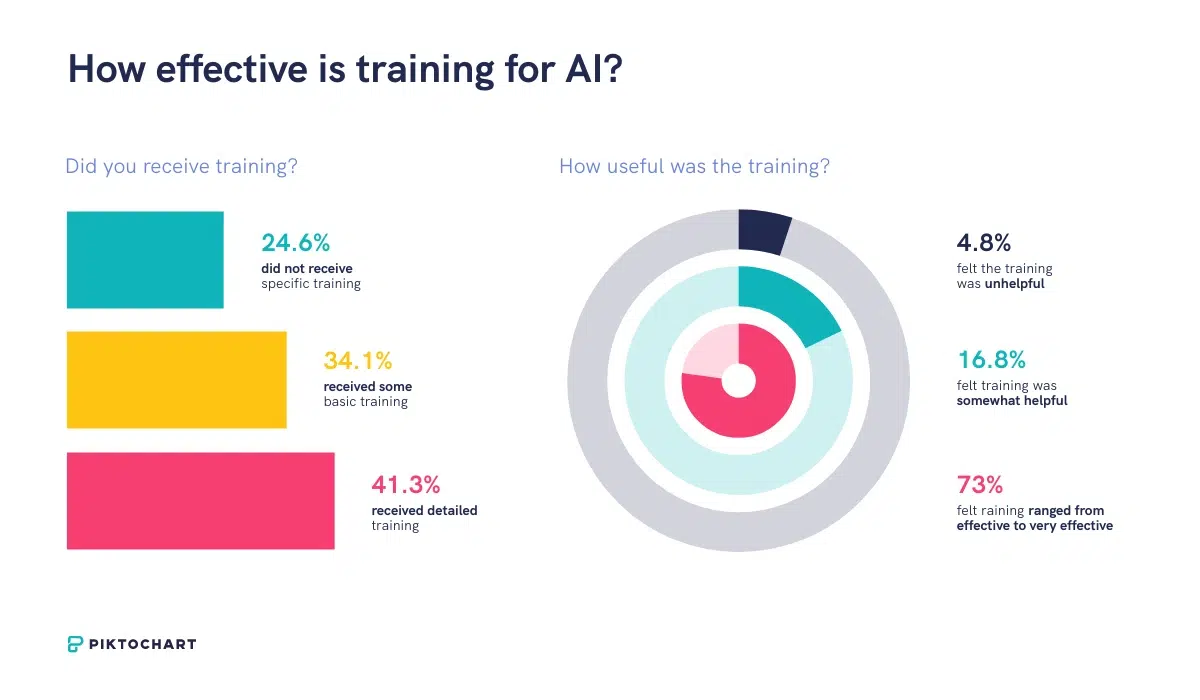
AI training found to be extremely helpful
- Three quarters of respondents received some amount of training on using new AI tools.
- About one third percent of respondents said employees received some basic training and 41.3 percent of respondents said employees received detailed training on using new AI tools.
- For those who did receive training, 16.8 percent said that the training they received was somehow helpful and 73 percent of those who were trained felt training ranged from effective to very effective.
AI is not without its limitations
The biggest hurdles respondents’ companies faced when putting AI in place were making AI work with current systems, problems with data in terms of quality, access, and privacy, and figuring out clear uses and values for AI in their workplace.
Most respondents were optimistic about AI boosting short-term work productivity
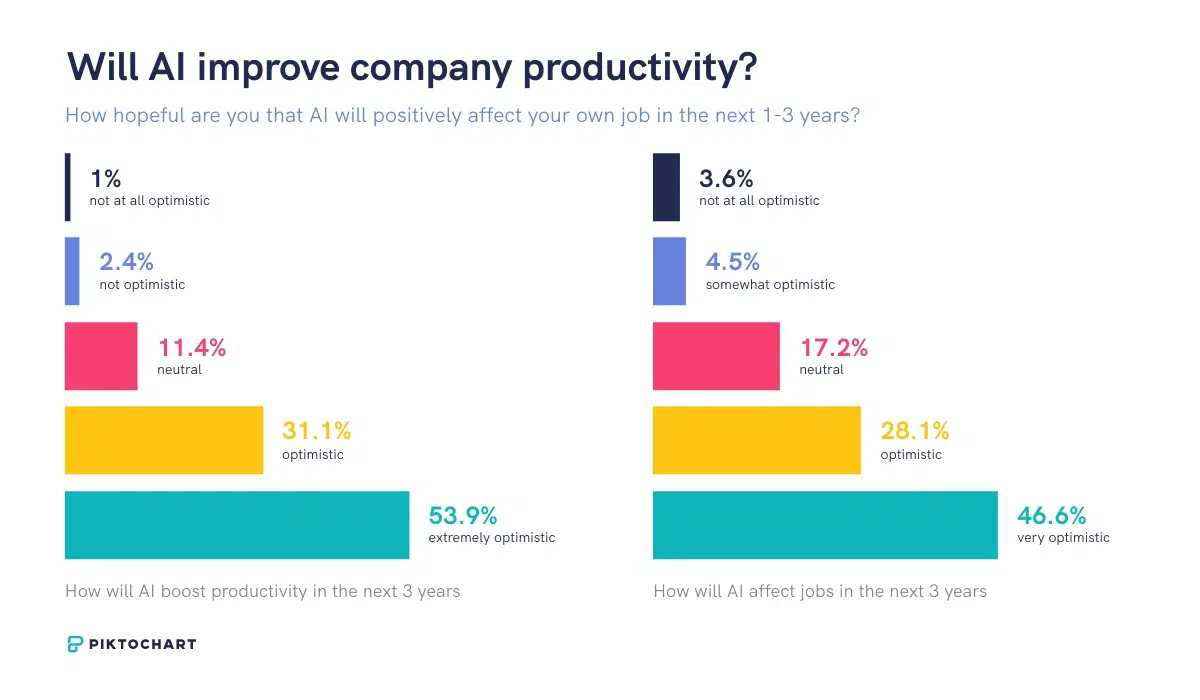
Most respondents were optimistic to extremely optimistic about AI boosting productivity in their companies in the next one to three years, with only one percent expressing pessimism about AI-based productivity increases in the short-term.
Most respondents optimistic AI will boost company productivity
- 85 percent of survey respondents were optimistic to extremely optimistic about AI boosting productivity more in their companies in the next one to three years, with almost one third of participants optimistic and 53.9 percent extremely optimistic.
- 11.4 percent were neutral about AI boosting productivity more in their company while one percent said they were not at all optimistic about AI’s potential to boost productivity in their workplace.
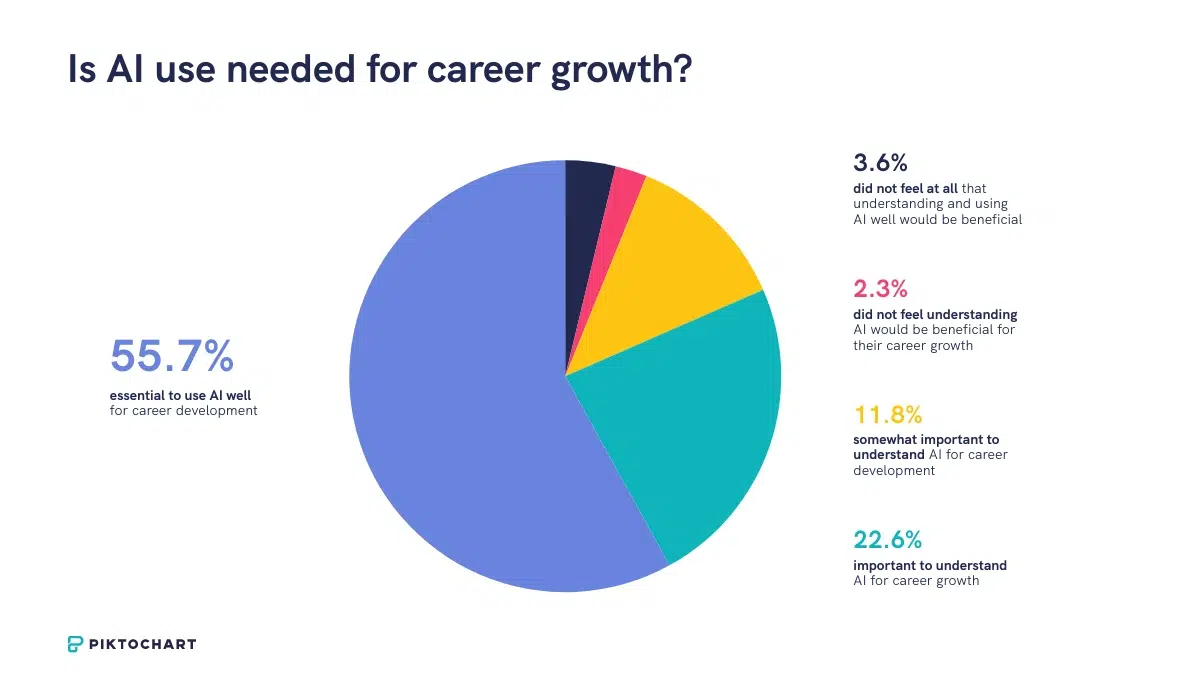
More than half of respondents felt it was essential for their career development to understand AI
When considering the impact of AI on their own careers, more than half of survey respondents felt understanding and using AI well was essential for their careers. Most were optimistic about AI’s positive effect on their own jobs in the next one to three years, though potential job loss was a source of unease.
Understanding AI is important for career growth
- More than half of survey respondents felt that it was essential for their career growth to understand and use AI well, while almost a quarter felt it was important to understand AI.
- This means 78.3 percent of users feel optimistic about the future of AI in the workplace if they feel strongly that it is important or essential to understand and use AI well.
- Meanwhile, 11.8 percent of respondents felt it was somewhat important to understand AI while 3.6 percent did not feel at all that understanding and using AI well would be good for career growth.
- The least optimistic about the benefits of understanding and using AI for career growth were those in the technology field, particularly staff in IT and Operations.
Three quarters of respondents feel AI will positively affect their jobs in the next 1-3 years?
- While nearly ten percent of respondents ranged from somewhat optimistic to not at all optimistic about AI positivity affecting their own job in the next one to three years, almost three quarters of respondents were optimistic to very optimistic.
- 17.2 percent of survey respondents were neutral about AI’s positive effect on their own job in the next one to three years, but 46.6 percent were very optimistic about the positive effect of AI for them in the near future.
Users hope to AI automation can bring better work-life balance
- When asked to rank their biggest hopes for AI at work in the future, the number one hope for survey participants in terms of ranked responses was that AI could automate more tedious tasks, followed by hope for a better work-life balance.
- In terms of the number of total responses, participants hoped for AI to boost creativity and bring better work-life balance.
Concerns about AI causing job and skill loss
- The number one worry for participants in terms of ranked responses was that AI would cause people to lose their jobs. The second biggest worry was that people would lose skills because they relied too much on AI.
- Overall, in terms of total responses, losing skills and potential ethical problems such as bias, privacy, and monitoring were the biggest worries about AI at work in the future for respondents.
Less than one third of respondents thought government AI policy is good enough
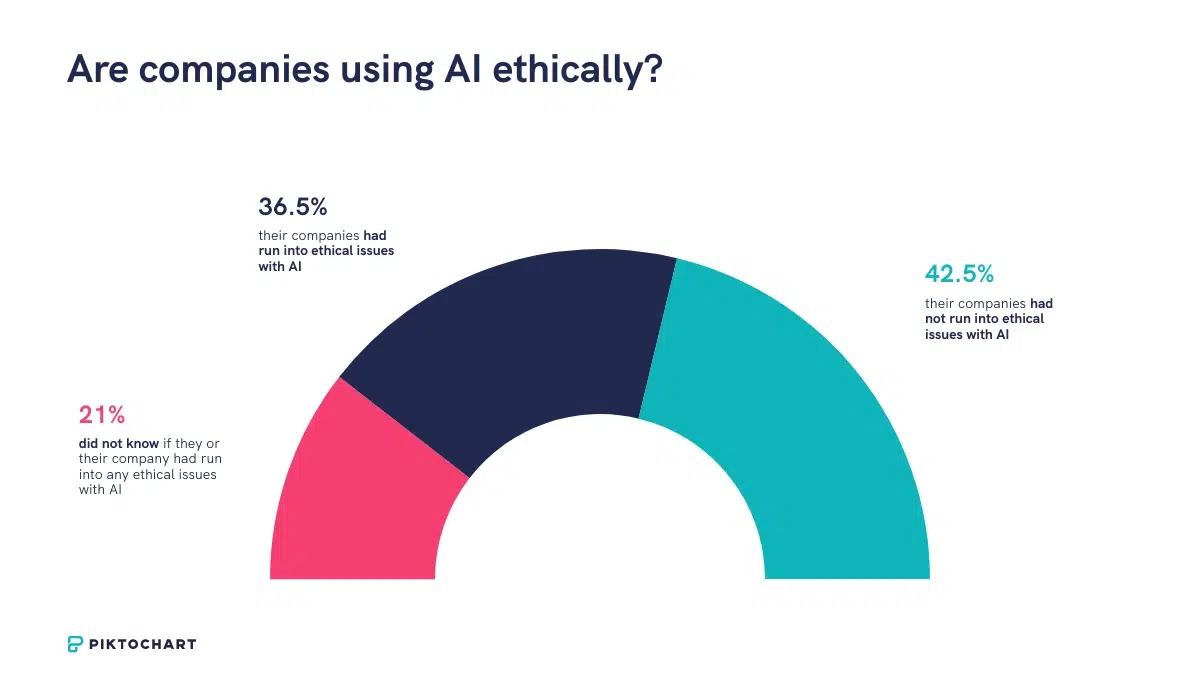
More than a third of respondents said that their companies had encountered ethical issues with AI, which were dealt with by extra training and policy revisions. Only about 30 percent of survey participants felt current government regulations regarding AI at work were good enough.
AI and the potential for ethical issues – how do we fix it?
- While 21 percent of respondents did not know if their company had run into any ethical issues with AI, nearly double that number, 42.5 percent, said their companies had not run into any ethical issues with AI.
- 36.5 percent of respondents said that their companies had encountered ethical issues with AI. Their companies dealt with these ethical issues by training employees on responsible AI use, developing internal policies and guidelines, adjusting AI algorithms, and using AI auditing tools.
Are current government regulations about AI at work good enough?
- This question yielded the least optimistic views about AI in the entire survey. 18.6 percent of respondents did not feel like current government regulations about AI at work were good enough whereas 29.9 percent did.
- 8.6 percent of respondents did not know if current government regulations about AI at work were good enough and 43 percent felt that current regulations needed more development.
- This signals that only a minority of 29.9 percent believed that the current government policy was up to par while 70.2 percent of respondents did not know if current regulations were good enough, needed more development, or were not good enough.